
Minister of Industry Agus Gumiwang Kartasasmita stressed that cross-sector collaboration is an important aspect of strengthening the competitiveness and sustainability of the national fashion industry, especially as the fashion industry has great potential to become the backbone of Indonesia's economy.
“With a long value chain from upstream to downstream, this sector must be strengthened through collaboration among stakeholders, from designers, SMI players and academics to financial institutions and the government,” the Minister of Industry said in a statement in Jakarta on Thursday (23/10).
According to the Minister of Industry, the fashion sector, which is closely linked to the textile and apparel industry, is one of the mainstay sectors in strengthening the national economy. This is reflected in textile and apparel exports in 2024, which reached USD 11.96 billion, up 2.43 percent from the previous year.
“This positive achievement shows that the Indonesian fashion industry is competitive internationally. There is therefore still great opportunity to strengthen its position in the global market,” he said.
Agus further stressed the importance of increasing product added value and export competitiveness, and expanding the innovation and entrepreneurship ecosystem of the national fashion industry. “Kemenperin is committed to providing various policies and programs that support industry players, including facilitating technology, financing and product promotion at national and global levels,” he said.
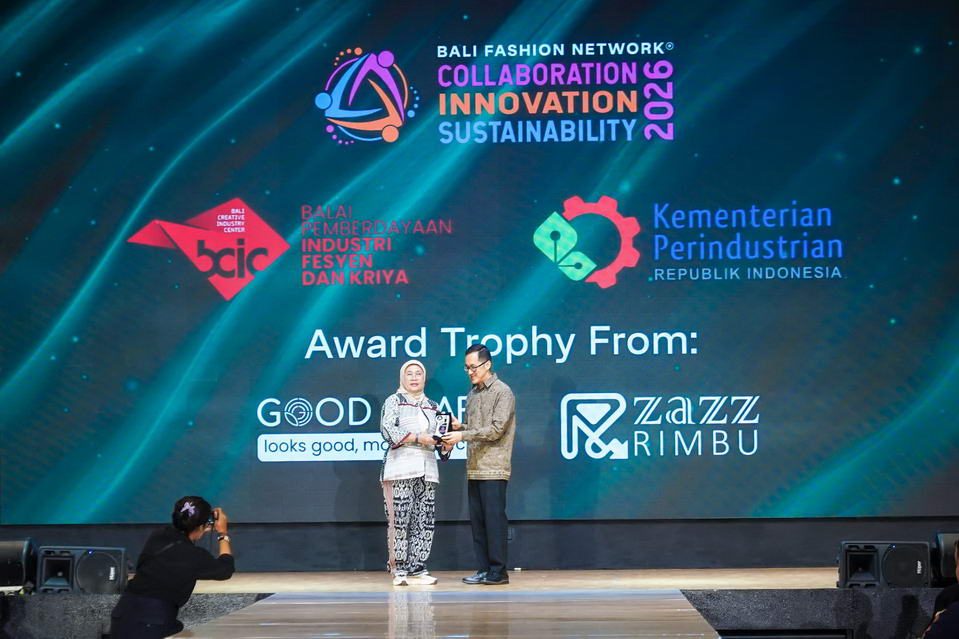
The Director General of Small, Medium and Miscellaneous Industries (IKMA), Reni Yanita, explained that Kemenperin established the Fashion and Craft Industry Empowerment Center (BPIFK) in Bali in 2024 as a technical implementation unit under Ditjen IKMA. “BPIFK exists to connect various stakeholders in developing the national fashion and craft industry,” Reni said at Bali Fashion Network 2025 in Badung, Bali, recently.
BPIFK carries the 3C concept: Create, Connect and Catalyze. “Create” means a space for learning and honing skills so that industry players can increase the competitiveness of their products. “Connect” means linking SMI players with the wider industrial ecosystem, while “Catalyze” serves as an accelerator for businesses to move up a class.
Reni added that collaboration among stakeholders is key to forming an integrated national fashion value chain, from raw materials, design, production and branding to marketing. “All these stages must be strengthened with support from educational, research, financing and certification institutions, through to logistics,” she added.
On that occasion, the Director General of IKMA also presented the Machinery/Equipment Restructuring program, which reimburses part of the purchase price of machines, up to 40 percent for domestic products and 25 percent for foreign products, within a range of IDR 10 million–IDR 500 million per company per year.
“This program is regulated by Ministerial Regulation Number 9 of 2022 and is one of the strategic instruments for increasing SMI production capacity. With new, more efficient machines, the product quality and competitiveness of fashion SMIs will increase,” she explained.
The Head of BPIFK Bali, Dickie Sulistya, explained that applications for the restructuring program are submitted online via the SIINas portal. The process includes document verification, field surveys and the determination of application results. “Recipients must report their business progress every year for three consecutive years,” he said.
Meanwhile, the Director of Chemical, Clothing and Craft SMIs, Budi Setiawan, considered Bali Fashion Network 2025 a real form of collaboration among stakeholders. “This event is not just an exhibition of works, but also a platform to expand business networks, increase business capacity and strengthen the connectivity of the national fashion industry supply chain,” he said.
Source: Press Release of the Ministry of Industry of the Republic of Indonesia