
The Ministry of Industry (Kemenperin) continues to strengthen its commitment to preserving and developing the national batik industry so that it becomes more adaptive to market dynamics, especially in facing shifting trends and the tastes of the younger generation. These efforts are carried out strategically by Kemenperin through the Directorate General of Small, Medium and Miscellaneous Industries (Ditjen IKMA) in cooperation with the Indonesian Batik Foundation (YBI), as part of steps to safeguard cultural heritage while encouraging inclusive and sustainable economic growth.
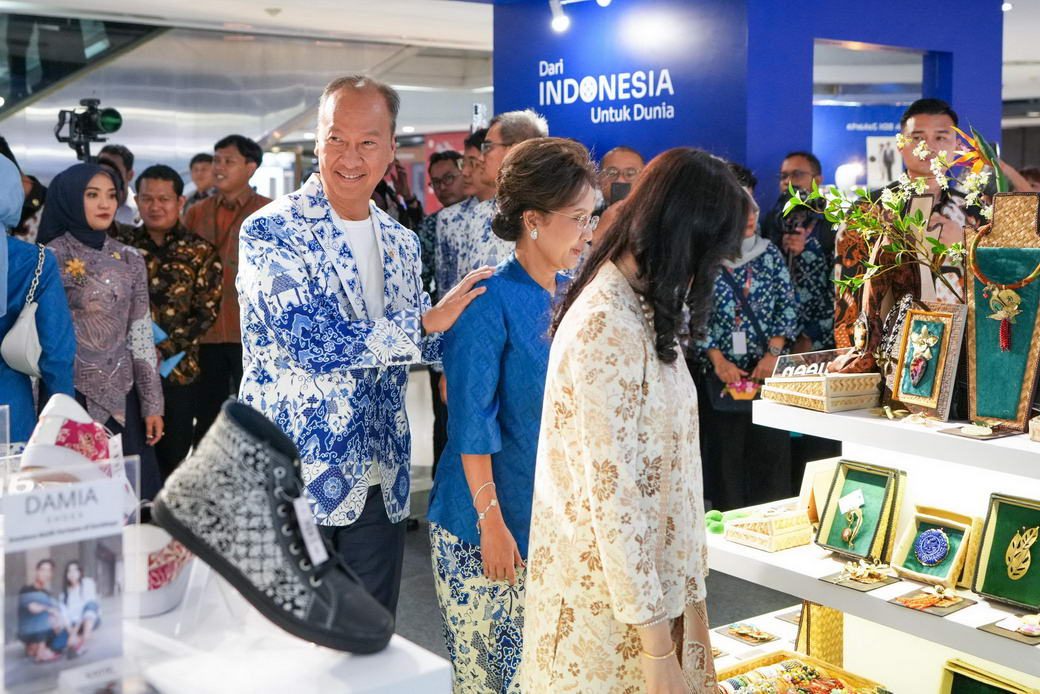
“I want GBN to become a major movement, a reminder for us to love, use and preserve batik as the nation's identity. We need to work together to foster and maintain public pride in batik, not only as a symbol of tradition, but also as part of today's lifestyle. It is not old-fashioned, it is classy, and it can be a long-term industry,” Minister of Industry Agus Gumiwang Kartasasmita said at the opening of Gelar Batik Nusantara (GBN) 2025 at Pasaraya Blok M, Jakarta, on Wednesday (30/7).
The event was also attended by the Chair of the National Crafts Council (Dekranas), Selvi Gibran Rakabuming; the Executive Chair of Dekranas, Tri Tito Karnavian; the Minister of Tourism and Creative Economy, Widyanti Putri Wardhana; the founder of the Indonesian Batik Foundation (YBI), Jultin Ginandjar Kartasasmita; and the Chair of the Indonesian Batik Foundation (YBI), Gita Gita Pratama Kartasasmita.
The Minister said the batik industry needs product innovation, increased product competitiveness, production efficiency and consumer education about batik in order to face shifting market tastes, especially to target the younger generation (Gen Z). This is necessary given that Gen Z is active in character, values the originality or uniqueness of a product's meaning, and is sensitive to social and environmental issues.
In this context, the Minister stressed that preserving batik must be accompanied by a real contribution from the public through consuming domestic products. “Being proud is not enough. We must all buy batik products. Because by shopping, we preserve the national cultural ecosystem while boosting the economy of batik craftsmen in various regions,” he stressed.
The batik industry is currently spread across 11 provinces with almost 6,000 business units and around 200 SMI centers. However, the challenges of regeneration and career changes have significantly reduced the number of craftsmen since the pandemic. Kemenperin is therefore encouraging innovation in design, technology and marketing strategies to reach new markets such as Gen Z.
Data from the 2020 BPS Directory of Centers show that batik exports were still below USD 8 million, but up 76% from the previous year. Meanwhile, the domestic market shows significant growth, with batik increasingly worn as part of everyday lifestyle, especially among young people.
“The trend among young Indonesians today shows that batik is worn more and more in everyday life, not only at formal events. This is a golden opportunity that needs to be seized through design innovation and the right marketing strategy,” the Minister of Industry said.
As part of GBN and National Batik Day 2025, Kemenperin held a number of webinars such as “Batik for Gen Z: Tradition Answers Trends” and “Love for the Archipelago's Wastra: Applying Environmental Sustainability in the Batik Industry”, aiming to bring batik closer to young markets and strengthen commitment to environmental sustainability.
This year, Kemenperin and YBI chose Batik Merawit from Cirebon as the icon of Gelar Batik Nasional–National Batik Day 2025. The Gelar Batik Nusantara exhibition is held on 30 July–3 August 2025 at Pasaraya Blok M Jakarta, with a range of programs. Besides exhibitions by a number of SMIs, there will be fashion shows, talk shows and workshops throughout the event. Talk show topics include “Getting to Know Eco-Friendly Palm Batik”, “Urban Batik: When Heritage Becomes Style”, “Embracing Heritage, Greeting the Present”, and “Drawing and Writing as an Effort to Preserve the Batik Industry and Culture”.
“Synergy between central and regional governments, businesses and academics is a key factor in building a strong and sustainable batik industry ecosystem. These efforts not only safeguard our ancestral cultural heritage, but also lay the foundation for a competitive future for the archipelago's wastra industry toward the vision of Golden Indonesia 2045,” the Minister of Industry added.
Source: Press Release of the Ministry of Industry of the Republic of Indonesia