
The growth in the world's Muslim population has had a significant impact on the growth of the Muslim fashion industry market, also known as modest fashion. The rapid flow of information on social media has also made the trend of using modest fashion products more inclusive and no longer limited to Muslims.
Minister of Industry Agus Gumiwang Kartasasmita said global consumption of Muslim fashion products continues to rise. According to the State of Global Islamic Economy Report (SGIER) 2024/2025, global Muslim fashion consumption reached USD 327 billion in 2023 and is projected to rise to USD 433 billion by 2028.
“This shows that the modest fashion industry has very large market prospects and must grow so that it can open strategic opportunities for Indonesia to strengthen its role as a producer as well as a global modest fashion trend center,” the Minister of Industry explained in a statement in Jakarta on Friday (13/3).
The potential of the domestic modest fashion industry in the global market also shows promising results. This can be seen from Indonesia's modest fashion exports to member states of the Organization of Islamic Cooperation (OIC) in 2023, which reached USD 990 million.
“This value increased by 83 percent compared with 2022, which reached only USD 540 million, making Indonesia the seventh-largest exporter to OIC countries,” the Minister of Industry said.
Nevertheless, fashion product exports to OIC member states are still dominated by China, Turkey and India. “It is the task of all stakeholders to increase Indonesia's role in the global Muslim fashion market,” he added.
The Director General of Small, Medium and Miscellaneous Industries (IKMA), Reni Yanita, said Indonesia has enormous fashion industry potential, both as a market and as a producer. “Indonesia has the potential to become one of the main players in the global modest fashion industry, with a labor-intensive industrial sector,” she said.
According to BPS data, in 2024 there were 594 thousand small apparel industries employing 1.2 million workers. “Modest fashion has now developed into a global fashion trend that appeals not only to Muslims, but also to people across cultures and lifestyles,” Reni said.
According to her, the concept of modest fashion keeps evolving to become more inclusive, regardless of religion, ethnicity or individual preference. Indonesia has great potential to become the world's modest fashion center, supported by the creativity of local designers, cultural richness and a diversity of high-quality textile materials that are part of the nation's identity.
“This potential is further strengthened by Indonesia's achievement which, according to the State of Global Islamic Economy Report (SGIER) 2024/2025, ranked first for the local ecosystem supporting the development of the modest fashion industry,” Reni said.
Development collaboration
In line with the implementation of the national mandatory halal certification, Reni continued, from October 2026 halal certification will apply to, among others, consumer goods, including fashion and modest fashion products, which is a strategic momentum for increasing the competitiveness of national industry.
“This policy not only guarantees quality, safety and consumer trust, but also creates added value for Indonesian modest fashion products in the global market,” she said.
As a country that comprehensively applies halal certification to consumer goods, Indonesia can offer differentiation and a competitive advantage over products from other countries. With guaranteed and integrated halal standards, Indonesian modest fashion products have a greater chance of penetrating export markets, especially countries with large Muslim populations and global markets that increasingly prioritize ethical fashion, sustainability and product traceability.
“Through the synergy of industrial policy, design innovation and the application of halal certification as a global quality standard, Indonesia is expected to strengthen its position as the world's modest fashion center while increasing the fashion industry's contribution to national economic growth and non-oil and gas exports,” the Director General of IKMA explained.
Reni stressed the importance of collaboration among stakeholders in developing the Muslim fashion industry. “The development of the modest fashion industry cannot be separated from the role of various parties. We therefore invite all stakeholders, including associations, the textile industry, businesses, designers, academics, influencers, marketplaces and consumers, to realize a sustainable and competitive modest fashion industry,” she explained.
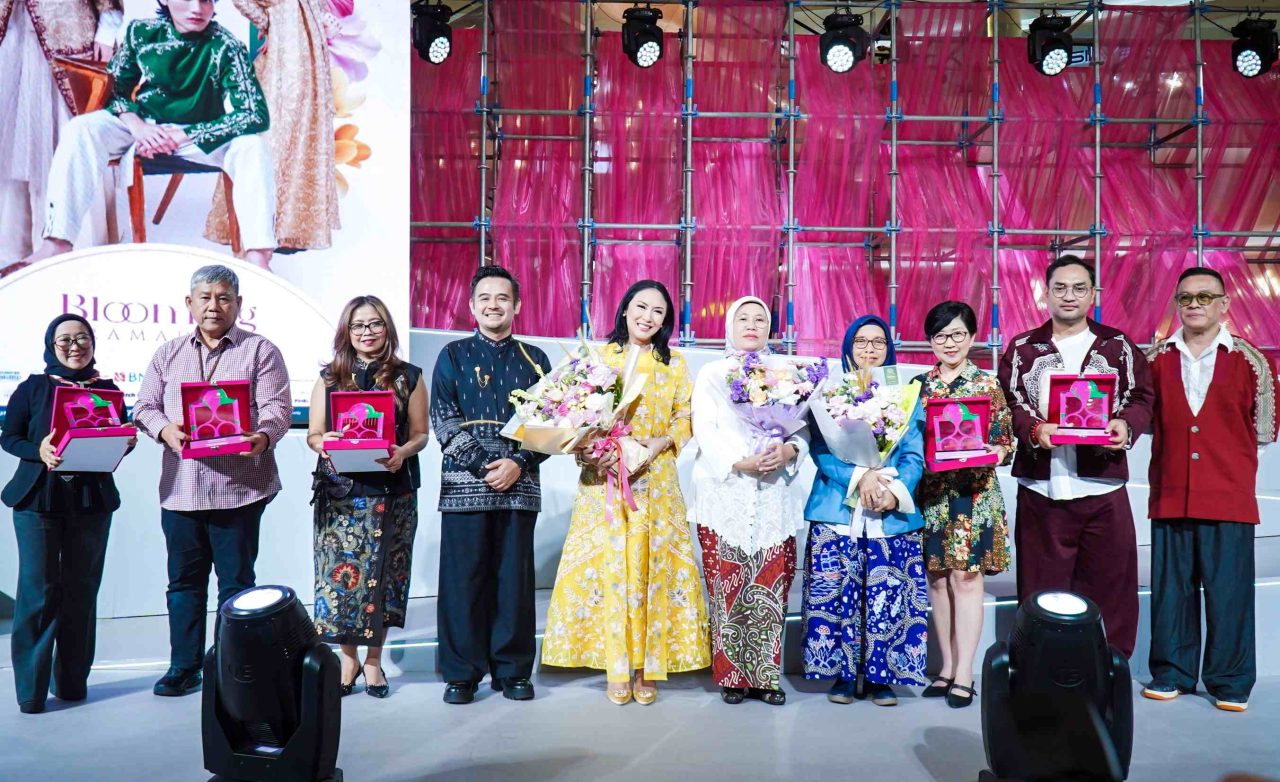
Reni also expressed her support and appreciation to the Indonesian Fashion Designers Association (APPMI) and all other parties involved in the commitment to developing modest fashion in Indonesia through the Ramadan Runway event, which has been held consistently and has now entered its 14th year. “I am optimistic that the involvement and participation of various parties will strengthen the national modest fashion ecosystem,” she added.
The Director of Chemical, Clothing and Craft SMIs, Budi Setiawan, said the holy month of Ramadan is not only a time to increase worship and spiritual reflection, but also a driving force for the creative economy and the national fashion industry.
“We hope this event can be a space of creative expression for designers, creative industry players and modest fashion lovers to showcase their best work while inspiring a dress style that is modest, full of character and still follows modern trends,” Budi concluded.
Source: Press Release of the Ministry of Industry of the Republic of Indonesia