

The engines of Indonesia's manufacturing industry are running faster as new market demand rises. This positive condition is reflected in Indonesia's Manufacturing Purchasing Managers’ Index (PMI) released by S&P Global for June, which reached 52.5, a significant rise from 50.3 the previous month.
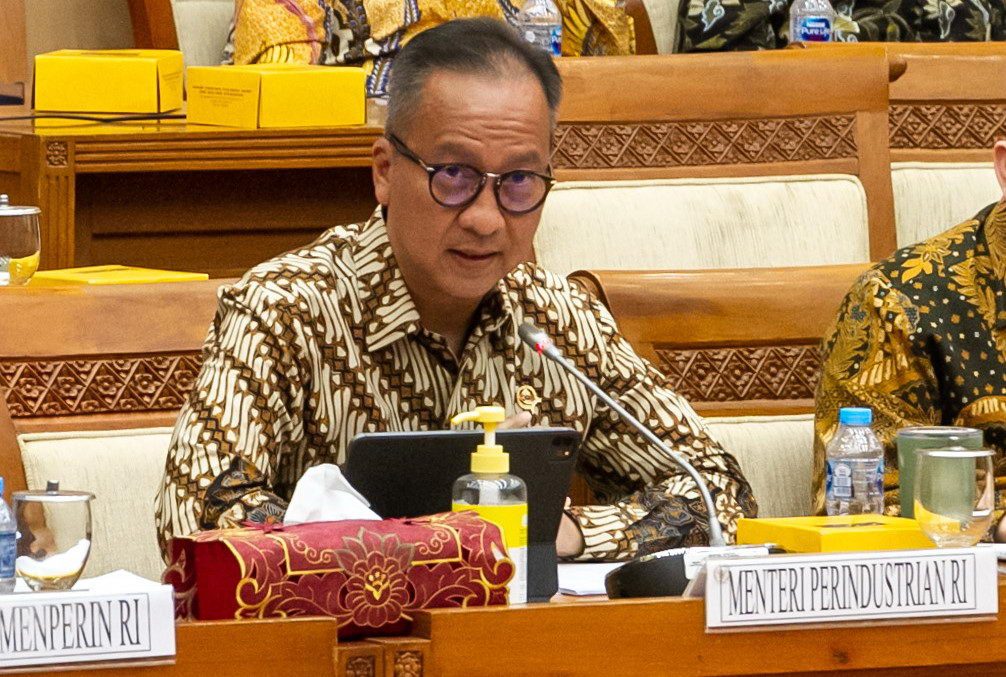
“Alhamdulillah, we should be grateful that our manufacturing activity keeps growing. This is marked by Indonesia's Manufacturing PMI remaining in the expansion phase for 22 consecutive months, almost two years. This means our industry players' overall optimism has also increased,” Minister of Industry Agus Gumiwang Kartasasmita said in Jakarta on Monday (3/7).
Indonesia's Manufacturing PMI in June 2023 exceeded the PMIs of ASEAN (51.0), Malaysia (47.7), Myanmar (50.4), the Philippines (50.9), Taiwan (44.8), Vietnam (46.2), Japan (49.8), China (50.5), South Korea (47.8), the United Kingdom (46.2) and France (45.5).
“The rise in Indonesia's Manufacturing PMI in June is in line with the rise in the Industrial Confidence Index (IKI) we released earlier: IKI in June 2023 reached 53.93, up 3.03 points from May 2023. This is also the highest since IKI was first released in November 2022,” Agus said.
The Minister stressed that the government has launched the Final Draft of the National Long-Term Development Plan (RPJPN) 2025–2045 to realize the Golden Indonesia 2045 Vision. By the centenary of independence, 22 years from now, Indonesia is targeted to be among the five largest economies in the world.
“We know manufacturing has so far made a major contribution to the national economy. The government is therefore determined to focus on strategic policies that support industry, such as maintaining the availability of raw materials and energy, expanding markets, optimizing domestic products and import substitution,” he said.
According to United Nations Statistics data, Indonesia is among the top 10 manufacturing countries by percentage contribution to global manufacturing output, alongside other major countries such as China, the United States, Japan, Germany, India and South Korea.
Minister Agus stressed that, in line with President Joko Widodo's direction, industrial downstreaming is a great leap in building Indonesia's future. Downstreaming is the process of increasing a commodity's value added by processing or refining raw materials into semi-finished or finished goods. Derivative or downstream-processed products fetch a higher selling price than raw materials.
“We are focusing on industrial downstreaming policies in three sectors: agro-based, mining and mineral-based, and oil, gas and coal-based industries. Gradually, the government continues to stop exports of raw mining materials, including bauxite, tin and alumina,” he added.
However, amid the expansion of national manufacturing, the textile and textile products (TPT) industry is still contracting. It was even one of three manufacturing subsectors in contraction in the June 2023 IKI survey.
“The textile industry is still suffering because the domestic market is flooded with imports, especially those entering through Bonded Logistics Centers (PLB). Kemenperin is calling for strict supervision of goods leaving PLBs for the domestic market, and of marketplaces, which are also an entry point for imported textile products,” Agus stressed.
Nevertheless, Kemenperin also sees opportunities for the TPT industry with the new school year, which is believed to boost and revive the struggling industry. Through the Increased Use of Domestic Products (P3DN) policy, meeting demand for state school uniforms and government employee uniforms is expected to increase production in the TPT industry.
According to the S&P Global report, the expansion of Indonesia's manufacturing industry in June 2023 was supported by rising new demand. This led to higher production, which also increased employment.
Jingyi Pan, Economics Associate Director at S&P Global PMI Market Intelligence, said growth momentum across Indonesia's manufacturing sector accelerated again in June. “The overall pace of demand growth was solid, although weak external demand continued to hold back total sales growth,” she said.
Source: Press Release of the Ministry of Industry