

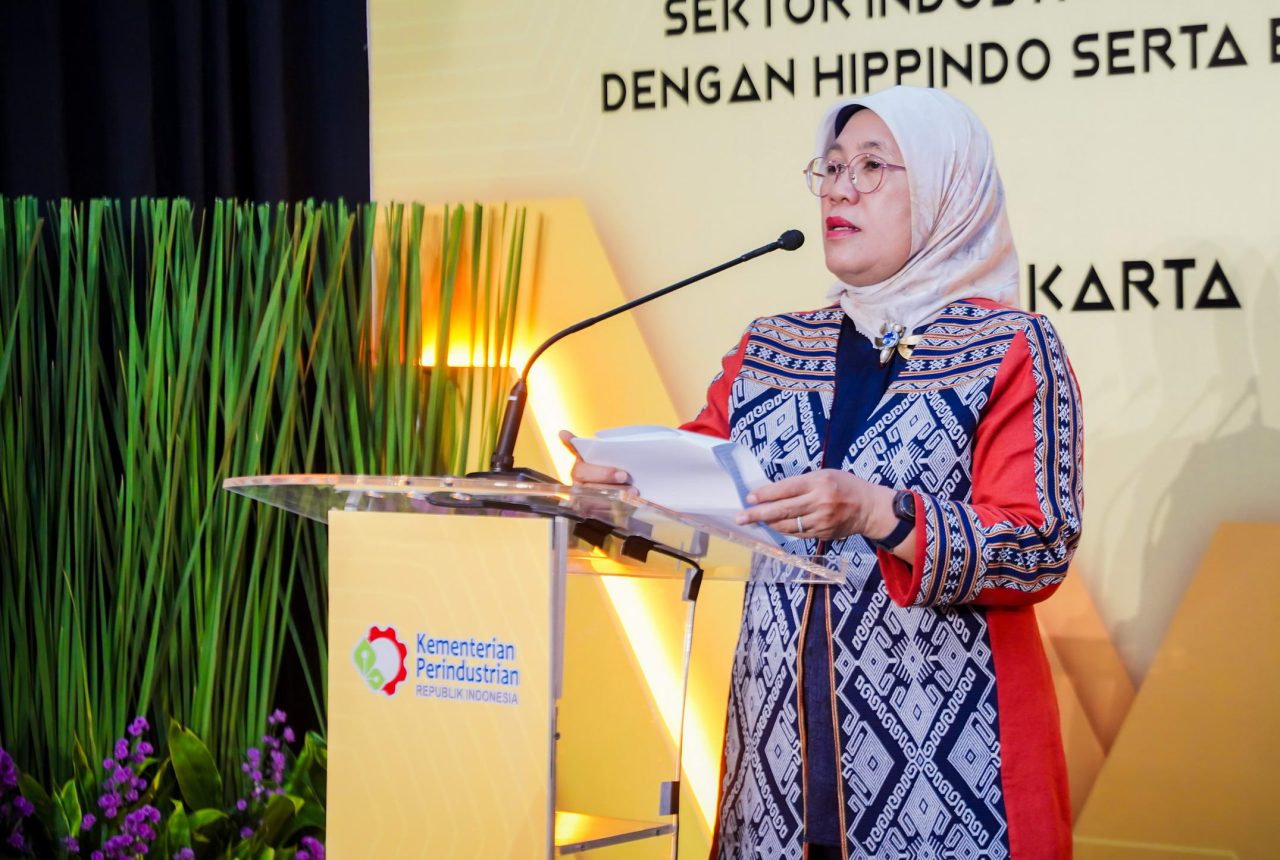
The Ministry of Industry continues to strengthen the sustainable development of the national fashion and craft industry sector through various industrial development programs and activities, especially for small and medium industry (SMI) players. These efforts are carried out by strengthening design innovation, using technology, improving the quality of human resources and expanding access to domestic and international markets to increase the competitiveness of Indonesian fashion and craft products.
This commitment was realized through the inauguration of the Fashion and Craft Industry Empowerment Center (BPIFK) building in Badung Regency, Bali, by Minister of Industry Agus Gumiwang Kartasasmita on Friday (8/5). BPIFK is a work unit under the Directorate General of Small, Medium and Miscellaneous Industries (IKMA), officially established in 2024, growing out of creative industry empowerment programs that began in 2015 through the Bali Creative Industry Center (BCIC).
“The fashion and craft industry plays an important role in supporting the national economy. In Q1 2026, the GDP of the fashion and craft industry was recorded at IDR 120.13 trillion, up 7.89 percent from Q1 2025 at IDR 111.34 trillion,” Minister Agus said in his remarks. He also said that the growth of the fashion and craft industry in 2025 reached 4.93 percent, higher than the 2.43 percent growth in 2024.
The Minister of Industry added that the fashion and craft sector also saw a significant increase in investment. In Q1 2026, Domestic Direct Investment (PMDN) in the sector reached IDR 4.83 trillion, while Foreign Direct Investment (PMA) reached IDR 9.38 trillion, bringing total investment to IDR 14.21 trillion.
This positive performance is also reflected in the exports of the national fashion and craft industry in early 2026. In January–February 2026, exports of the ready-made apparel fashion industry reached USD 1.44 billion, the textile industry USD 0.52 billion, and the craft industry USD 2.43 billion. “This shows that the national fashion and craft industry still has strong competitiveness amid global market dynamics,” Agus said.
Besides large industry, fashion and craft SMIs also make a strategic contribution to economic equity and national employment. Based on 2024 Statistics Indonesia data, the number of fashion and craft industry businesses at SMI scale reached 1.75 million, employing around 3.69 million people.
“This number is an important part of strengthening the national fashion and craft industry,” the Minister of Industry stressed. He also explained that the sector's great potential is supported by a strong industrial ecosystem, reflected in the existence of 1,825 fashion SMI centers and 3,496 craft SMI centers across Indonesia, based on 2025 data processed by Kemenperin's Ditjen IKMA.
According to Agus, Bali Province was chosen as the location for BPIFK because of its strong creative industry potential and ecosystem. Bali has 25 fashion SMI centers and 197 craft SMI centers, making it one of the largest creative industry centers in Indonesia.
“Bali has a strategic role as a hub for developing the national fashion and craft industry. Bali not only functions as a production center, but also as part of a creative industry ecosystem connected to national and international markets,” he said.
The Minister of Industry hopes BPIFK can be a catalyst for strengthening the national fashion and craft industry. BPIFK is directed to support the growth of new entrepreneurs, the development of business incubators, increased partnerships, facilitation of promotion and marketing, the development of SMI product design and innovation, and the strengthening of the Industry 4.0 transformation.
A green building
On that occasion, the Minister of Industry also emphasized Kemenperin's commitment to encouraging the application of green industry and increased use of domestic and TKDN-certified products. This was realized through the construction of the BPIFK Building, which applies Green Building (BGH) principles, including energy efficiency, waste management, healthy air quality and the use of natural lighting.
“The construction of the BPIFK Building also used domestic products, with a realization of 92 percent, and TKDN-certified products reaching 61.8 percent. I hope the BPIFK Building can be a good example of the consistent use of domestic and TKDN-certified products,” Agus said.
The Director General of Small, Medium and Miscellaneous Industries (IKMA), Reni Yanita, explained that construction of the BPIFK Building ran from 14 November 2024 to 13 February 2026. The building stands on 2,000 square meters of land and is currently in the process of obtaining a Certificate of Fitness for Use (SLF) and being assessed as a Green Building (BGH).
Reni added that BPIFK has a strategic function as a creative hub that helps increase human resource capacity by strengthening soft skills and hard skills, connects industry players with various stakeholders in the value chain, and serves as a business growth accelerator so that SMI players can move up a class.
“Through Q1 2026, BPIFK has assisted 722 fashion and craft SMI players spread across 29 provinces in Indonesia. This assistance has not only increased turnover and employment, but has also sustainably strengthened the business capacity, product quality and competitiveness of SMI players,” Reni explained.
Source: Press Release of the Ministry of Industry of the Republic of Indonesia