
The Ministry of Industry is serious about accelerating the transformation of the national manufacturing sector toward a sustainable and globally competitive industry. One of the strategic efforts is to ensure that the transformation is not only applied by large-scale industry, but also reaches millions of small and medium industry (SMI) players throughout Indonesia.
Minister of Industry Agus Gumiwang Kartasasmita stressed that the changing global industrial landscape requires industry players to no longer focus solely on product quality and production cost efficiency. Sustainability has now become a key indicator in determining a product's competitiveness in international markets.
“Global consumers and businesses are now paying more and more attention to sustainability throughout their supply chains. The transformation toward green industry is therefore no longer just an option, but a strategic necessity for national industry players, including SMIs,” the Minister of Industry said in a statement in Jakarta on Thursday (23/7).
According to Agus, challenges such as climate change, technological developments, the dynamics of world trade and rising sustainability standards in global supply chains signal that the competitiveness of industry in the future will no longer be determined only by the final product, but also by how that product is made.
Kemenperin is therefore committed to ensuring that the transformation toward green industry is inclusive. It must be accessible to all industry players, including the millions in the SMI sector, through various assistance programs, capacity building and cross-stakeholder collaboration.
“The transformation toward green industry needs to be realized through concrete steps at company level by applying business practices that are efficient, environmentally friendly and sustainable. This transformation must not only be an opportunity for large industry, but must also be accessible to millions of SMIs throughout Indonesia,” the Minister of Industry stressed.
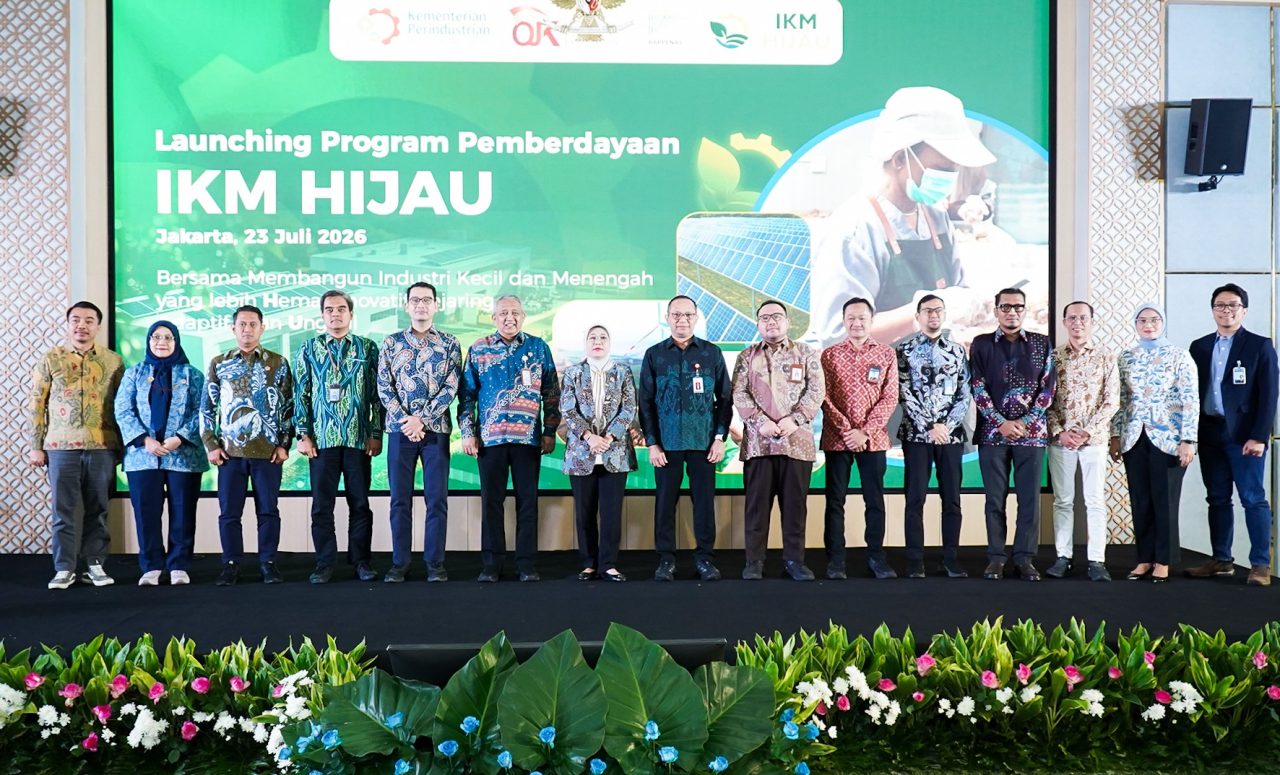
To put this commitment into practice, Kemenperin, through the Directorate General of Small, Medium and Miscellaneous Industries (Ditjen IKMA), launched the 2026 Green SMI Empowerment Program. The program is a strategic step to accelerate the transformation of SMIs so that they become more adaptive to global market demands while being able to apply sustainable business practices.
“The program is designed as a bridge between national green industry policy and the real needs of SMI players on the ground, through implementation guidance that is simple, practical and carried out in stages,” said the Director General of Small, Medium and Miscellaneous Industries (IKMA), Reni Yanita, in her remarks at the launch of the Green SMI Empowerment Program in Jakarta on Thursday (23/7).
Besides improving understanding of the green economy, the program also aims to build the capacity of SMI players so that they can apply business practices that are more efficient, environmentally friendly and sustainable.
“The Green SMI Empowerment Program carries the HIJAU concept, which represents five core values of SMI transformation: Hemat (Efficient), Inovatif (Innovative), Jejaring (Networked), Adaptif (Adaptive) and Unggul (Excellent),” Reni said. Green SMIs are defined as businesses that apply the principles of the Sustainable Development Goals (SDGs) by strengthening environmental, social and corporate governance aspects in running their businesses.
The Director General of IKMA added that the transformation toward green industry has become a strategic necessity for SMI players in Indonesia. “Applying green business practices is believed to have a significant impact on increasing competitiveness while strengthening the sustainability of national industry,” she added.
According to Reni, the urgency of the program is also reflected in the large population of SMIs in Indonesia. Based on Statistics Indonesia (BPS) data, in 2024 there were around 4.45 million SMI units, or 99.79 percent of all national industrial business units. With such a large number, the transformation of SMIs toward green industry will make an important contribution to sustainable national industrial development.
Strengthening the position of SMIs
Furthermore, applying Green SMI practices not only benefits the environment, but also improves production efficiency, expands market access, opens opportunities to obtain green financing, and strengthens the position of Indonesian SMIs in national and global supply chains.
“We hope to see SMI players who apply green activities in their businesses emerge, while creating role models that can inspire, serve as examples of good practice and drive transformation for other SMIs in various regions of Indonesia,”
Reni said.
As part of the program's implementation, Ditjen IKMA also launched the Green SMI Transformation Activity Guide Pocketbook and the Green SMI Empowerment Program Book. Both documents were prepared as practical guides for SMI players in applying green activities, and as a reference for various stakeholders to strengthen collaboration in developing the green industry ecosystem.
Reni explained that the Green SMI Empowerment Program was prepared as a follow-up to the implementation of the Indonesian Taxonomy for Sustainable Finance (TKBI) Version 3 in the manufacturing sector. The program also refers to Law Number 3 of 2014 on Industry, the national development direction in Bappenas' White Paper on Green MSME Empowerment, and the TKBI sectoral agnostic decision tree framework, translated into various green activities that all SMI players in Indonesia can apply.
In preparing the program, Ditjen IKMA involved various ministries, agencies, academics, practitioners, the business community and SMI players. Strategic partners that collaborated include the Financial Services Authority (OJK), Bappenas, Kemenperin's Green Industry Center, Bank Indonesia, Padjadjaran University, PT Bank Rakyat Indonesia (Persero) Tbk, PT Telekomunikasi Selular, Business & Export Development Organization (BEDO), Terratai, WasteHub and various other stakeholders.
Meanwhile, the Secretary of Ditjen IKMA, Yedi Sabaryadi, explained that in-depth discussions with SMI players showed a need for implementation guidance that is simple, easy to apply and carried out in stages. Documenting green activities is also considered increasingly important as a basis for sustainability assessments and for opening access to green financing.
Based on discussions with stakeholders, Ditjen IKMA set 29 green activities as an implementation reference, consisting of 14 technical activities to support the achievement of Environmental Objectives (EO) and 15 management activities to strengthen sustainable governance leading to the Essential Criteria (EC). SMI players can choose the activities that best fit the characteristics of their business, while still prioritizing social aspects and waste management as a first step to prevent greenwashing.
Implementation of the 2026 Green SMI Empowerment Program will begin with outreach, seminars and participant curation before entering the technical assistance phase. Participants will receive training on TKBI, Green SMI principles, implementing green activities and strengthening digital capacity, through to presenting the impact of their transformation in a pitching session. Then in 2027, participants will receive further assistance in preparing sustainability reports.
Besides improving market opportunities and access to financing, program participants will also get priority to join various other strategic Ditjen IKMA programs, such as machinery and equipment restructuring, business matching and promotional activities.
SMI players who wish to join the Green SMI Empowerment Program can get information through the Instagram account @ikmhijauofficial and register via the daftar.esmartikm.id platform.
Source: Press Release of the Ministry of Industry of the Republic of Indonesia