

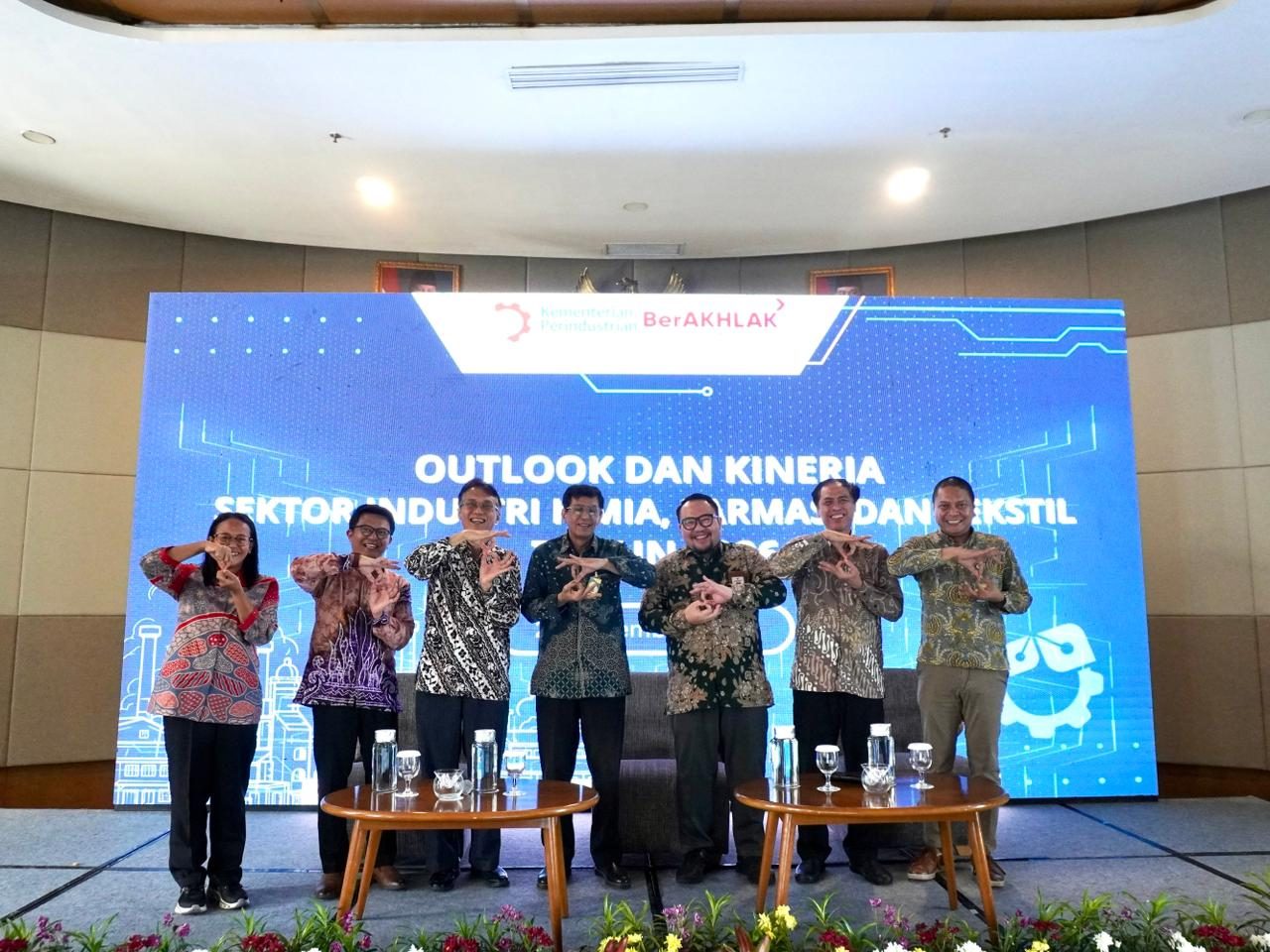
The Ministry of Industry has affirmed the resilience of the Chemical, Pharmaceutical and Textile Industries (IKFT) sector as one of the important pillars supporting national manufacturing stability throughout 2025. This positive performance is strong capital going into 2026, alongside the government's policy direction of driving economic transformation and efforts to achieve growth of up to 8% by 2029.
The Director General of Chemical, Pharmaceutical and Textile Industries (IKFT), Taufiek Bawazier, said the IKFT sector has remained resilient amid global dynamics and has maintained a significant contribution to manufacturing growth.
“The optimism of industry players signals that we are on the right track. The government's task is to ensure the ecosystem becomes increasingly conducive so that investment, exports and productivity can keep rising,” said the Director General of IKFT, Taufiek, at the IKFT 2026 Outlook and Performance event in Bogor on Tuesday (25/11).
Industrial performance throughout 2025 showed a fairly positive trend. In Q3 2025, the non-oil and gas manufacturing industry grew by 5.58% (YoY), outpacing national economic growth of 5.04%. The IKFT sector recorded even more expansive results, with growth of 5.92% and a contribution of 3.88% to national GDP.
In foreign trade, IKFT exports in January to August 2025 reached USD 35.25 billion, while imports stood at USD 32.31 billion. Chemical products, apparel, and leather and footwear were the main export pillars, while high imports of chemical raw materials show the need to strengthen the domestic upstream industrial structure.
In aggregate, IKFT industrial capacity utilization is around 60%, also driven by downstreaming policies, especially in oil and gas-based chemical industries and non-metallic minerals.
This strengthening is also reflected in rising investment flows, with realized investment in the IKFT sector from January to September 2025 reaching IDR 142.15 trillion, a significant increase from IDR 116.54 trillion in the same period the previous year.
In terms of employment, the IKFT sector also employed 6.7 million workers as of February 2025, or about 4.6% of the national workforce.
The government has affirmed its commitment to comprehensively strengthen the national industrial structure in support of the economic transformation targets set out in the RPJPN 2025–2045. These efforts include increasing manufacturing's contribution to GDP to 21.9% and accelerating national economic growth toward 8% by 2029.
In this context, the IKFT sector is directed to become a driving force through increased domestic consumption, optimized investment, accelerated exports and stronger import substitution.
“Our key is to strengthen the industrial structure from upstream to downstream, from self-reliance in raw materials and machine modernization to accelerating digital transformation and the circular economy,” Taufiek stressed.
He added that various priority programs have been prepared to strengthen the competitiveness of the IKFT sector, including accelerating the restructuring of machinery and equipment, downstreaming oil and gas, coal and mineral commodities, revitalizing the national fertilizer industry, increasing exports and investment, optimizing the use of domestic products, and accelerating the implementation of Industry 4.0 and strengthening raw material supply chains.
The IKFT sector also faces a number of structural challenges, such as high imports of chemical raw materials, dependence on Active Pharmaceutical Ingredients (API), the influx of cheap textile products that put pressure on domestic industry, and the potential rerouting of glass products from other countries. The government considers that these challenges must be addressed through a comprehensive strategy including stronger regulation, improved product quality, harmonized standards and expanded market access.
Through the IKFT 2026 Outlook and Performance event, the government hopes to strengthen coordination among stakeholders in formulating strategic steps to face next year's industrial dynamics. Kemenperin is optimistic that with good collaboration, continuous innovation and accelerated policies to strengthen the industrial structure, the IKFT sector will be increasingly able to support the national economy and increase Indonesia's competitiveness globally.
Source: Press Release of the Ministry of Industry of the Republic of Indonesia