

The manufacturing sector has once again shown its strategic role in national economic performance. According to Statistics Indonesia (BPS) data, manufacturing is the largest contributor to Gross Domestic Product (GDP), recording relatively stable growth over the past three years that has continued to be significant, reaching 5.30 percent in 2025.
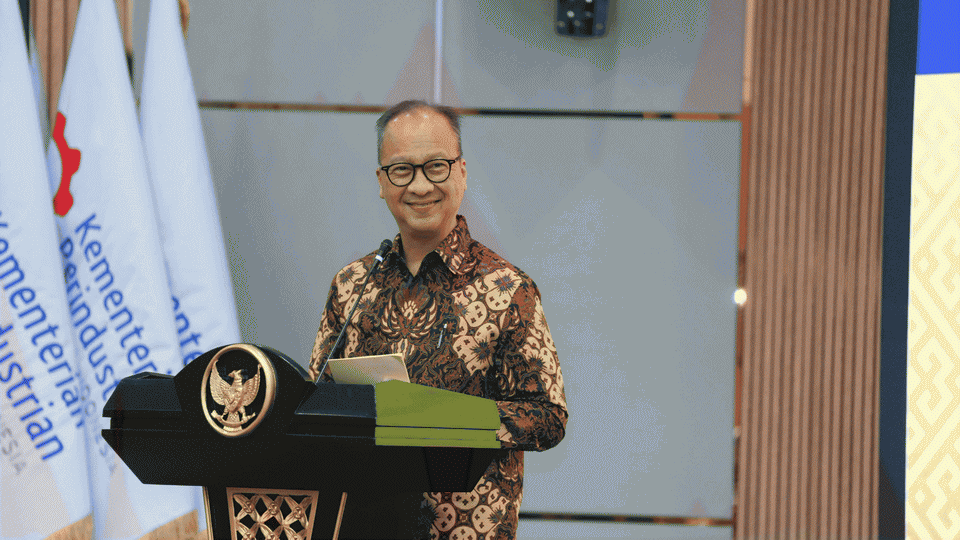
Minister of Industry Agus Gumiwang Kartasasmita stressed that this achievement by the manufacturing industry cannot be separated from the contribution of domestic industrial sectors that continue to endure amid global economic dynamics.
“Thanks to the hard work of the domestic industrial sector, manufacturing has consistently been the largest contributor to national economic growth compared with other sectors,” the Minister of Industry said in a statement in Jakarta on Tuesday (10/2).
The contribution of manufacturing cannot be separated from the performance of industrial sectors, especially the Chemical, Pharmaceutical and Textile Industries (IKFT), which also recorded positive growth throughout 2025. The IKFT sector grew by 5.11 percent, up from 4.21 percent the previous year. The sector also contributed 3.87 percent of GDP, with the largest contribution coming from the chemical, pharmaceutical and traditional medicine industry subsector at 1.83 percent.
“IKFT growth in line with national growth shows that the sector remains an important pillar of the non-oil and gas manufacturing industry and is able to maintain the momentum of national industrial growth,” said the Secretary of the Directorate General of IKFT, Sri Bimo Pratomo.
The IKFT sector's positive performance in 2025 was supported by several subsectors that grew significantly. The highest increase was shown by the chemical, pharmaceutical and traditional medicine industry subsector, with growth of 8.35 percent, up 2.49 percentage points from 5.86 percent in 2024. A fairly high increase was also recorded by the non-metallic mineral products subsector, which grew by 6.16 percent, far higher than in 2024, when it contracted by 0.6 percent.
Besides production performance, in terms of trade the IKFT sector recorded a surplus during January–November 2025, with exports reaching USD 49.15 billion, up USD 6.26 billion from the same period the previous year. This was also supported by the export performance of leading sectors, including the chemicals and chemical products subsector, which recorded exports of USD 20.79 billion.
Furthermore, the agriculture-based chemical industry subsector also saw a significant rise in exports, from USD 6.25 billion to USD 9.25 billion. This was followed by the everyday footwear industry subsector, which rose from USD 2 billion to USD 3 billion.
“Amid current global dynamics, world demand for domestic IKFT products has actually increased. These figures reflect the resilience of the IKFT sector to keep contributing to global supply chains,” Sri Bimo added.
On the other hand, investment in the IKFT sector also showed encouraging results. During January–September 2025, realized investment in the IKFT sector reached IDR 142.15 trillion, up from IDR 116.54 trillion in the same period in 2024. The largest investment was recorded by the chemicals and chemical products subsector at IDR 58.4 trillion.
Sentiment toward the sector still showed positive signals at the start of the year, reflected in the Industry Confidence Index (IKI) for January 2026, which remained in the expansionary phase at 54.12. This indicates a faster pace of expansion than the previous month's 51.90.
“These positive signals show the optimism of industry players and encourage the government to always maintain a conducive business climate so that the performance of the IKFT sector can keep improving,” Sri Bimo stressed.
To sustain these achievements, Kemenperin affirmed its commitment to continue accelerating the implementation of various priority programs to increase the competitiveness of national industry, including the IKFT sector. The positive growth trend not only needs to be maintained, but also strengthened by deepening the industrial structure, both upstream and downstream. Kemenperin consistently encourages sustainable industrialization as an effort to accelerate import substitution and increase the added value of domestic products.
Source: Press Release of the Ministry of Industry of the Republic of Indonesia