

Standardization plays a strategic role for the national manufacturing sector. It not only protects consumers and the environment, but also increases the competitiveness of the industrial sector, with a positive impact on national economic growth.
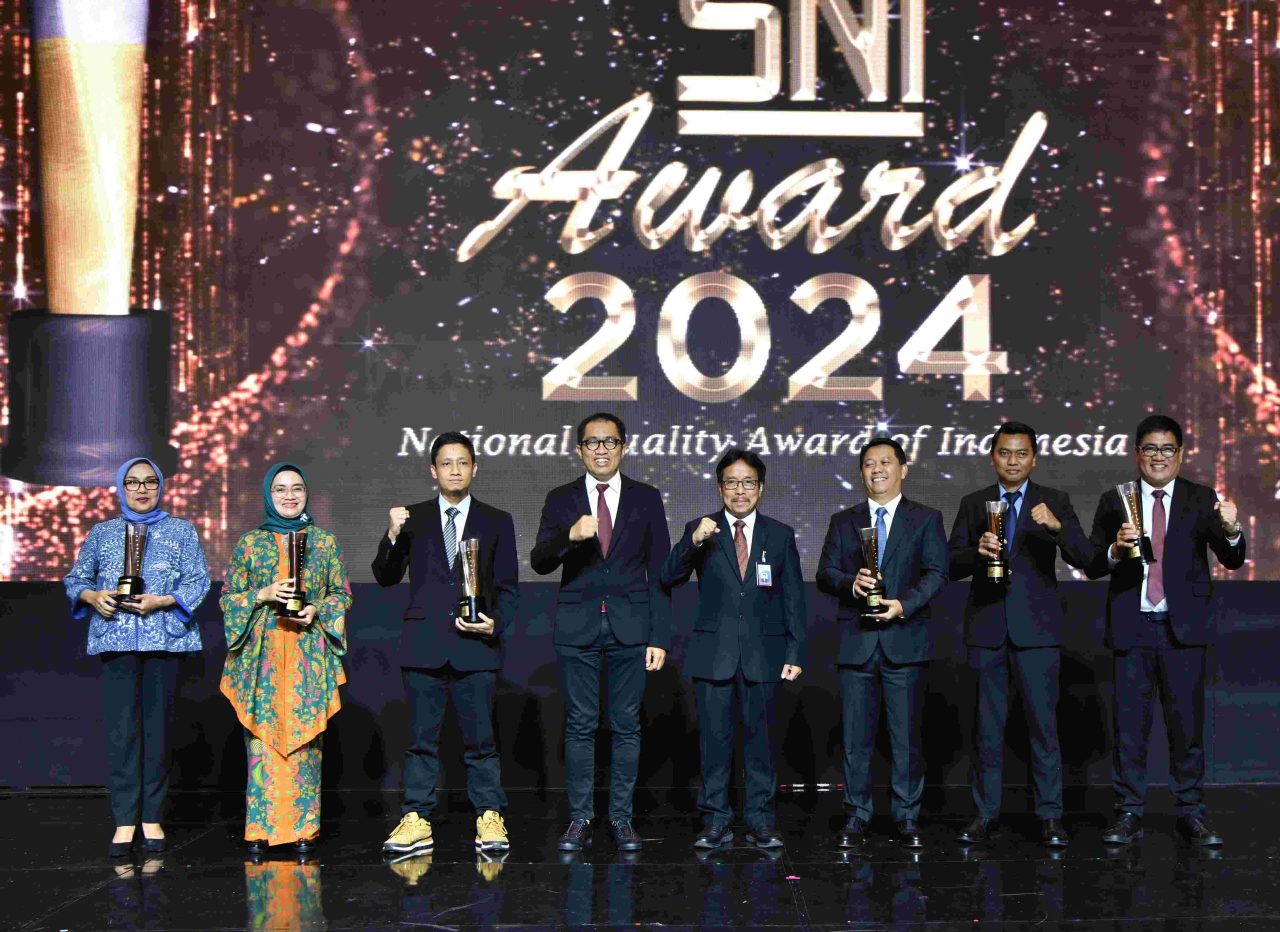
“This strategic role of standardization has raised the awareness of WTO (World Trade Organization) member countries to apply standards for products and services in their countries,” Deputy Minister of Industry Faisol Riza said at the 2024 SNI Award ceremony in Jakarta on Thursday evening (21/11).
According to the Deputy Minister, the large number of standards applied by countries around the world will make market access difficult for Indonesian products. “We know the WTO has become the gateway for global trade transactions and flows, and everything is regulated in such a way that the barriers governments once used to restrict goods from other countries are gradually disappearing. National standards therefore play an important role here,” he said.
The Deputy Minister hopes Indonesia will work even harder to increase the application of standards at home to reduce these trade barriers. “Harmonizing national standards with international standards will smooth flows and increase the role of our products in the global value chain,” he said.
Standardization will also improve efficiency in production. With clear guidance on technical specifications and procedures, companies can reduce wasted resources and operating costs. This efficiency directly contributes to higher profitability and competitiveness.
Faisol is optimistic that standardization will support the competitiveness of national priority industries, in line with one of the points of President Prabowo Subianto's Asta Cita: continuing downstreaming and industrialization to increase domestic added value in several priority industries.
These priority industries include natural resource-based industries (biological resources and mining downstreaming) and basic industries (basic chemicals and metals); medium- and high-tech industries (shipbuilding, automotive, downstream chemicals and pharmaceuticals, aerospace, electronics and digital); and skilled labor-intensive industries (food and beverages, textiles and textile products, footwear).
“I hope accelerating the implementation of the standardization strategy in these priority industries can increase our industrial competitiveness, which in turn will further boost the competitiveness of our country, which this year ranks only 27th in the world,” he said.
Increasing the application of standardization is therefore important to implement immediately. Here, the Ministry of Industry plays a strategic role in increasing the application of standardization in Indonesia's industrial sector. “One of Kemenperin's main steps in improving standardization is guiding and supervising the implementation of the Indonesian National Standard (SNI),” he said.
Kemenperin has partnered with the National Standardization Agency (BSN) to formulate, apply, enforce and supervise the application of SNI across industrial sectors. “Overall, Kemenperin acts as the main driver of standardization that supports product quality, industrial efficiency and Indonesia's competitiveness in international markets,” he added.
Kemenperin also continues to increase the application of standards for industrial products to give consumers certainty and quality assurance for the products industry makes. In implementing Permenperin 45/2022, Kemenperin has issued 33 Minister of Industry Regulations on mandatory SNI, with 12 in the promulgation process and soon to be issued, 11 to be harmonized soon, and 8 under discussion with stakeholders. Overall, 130 industrial SNIs are mandatory in 2024.
“I invite everyone to strengthen standardization development through closer collaboration between government, businesses, research institutions, academia, the public and relevant stakeholders, to build a strong culture of standardization,” he concluded.
Source: Press Release of the Ministry of Industry of the Republic of Indonesia