

Indonesia's wastra, or traditional fabric, industry, such as batik and tenun weaving, is closely linked to the development of the domestic fashion industry. The national wastra industry has high value in the form of an identity and distinctive character, the result of a blend of local wisdom and community creativity passed down from generation to generation. However, the complex production process, which requires the expertise and skills of artisans, is a challenge in itself for the national wastra industry as it competes in the fashion market.
The government therefore continues to work to make the wastra industry a leading commodity of national identity that can deliver great benefits for the economy and provide jobs for the community. The Director General of Small, Medium and Miscellaneous Industries (IKMA), Reni Yanita, said Indonesia's wastra industry has the potential to keep growing and become increasingly popular with local and international consumers.
“One of the efforts we are making together with regional governments to develop the national wastra industry is developing wastra SMI centers across the country so they become more competitive,” the Director General of IKMA said in an official statement in Jakarta on Sunday (25/5).
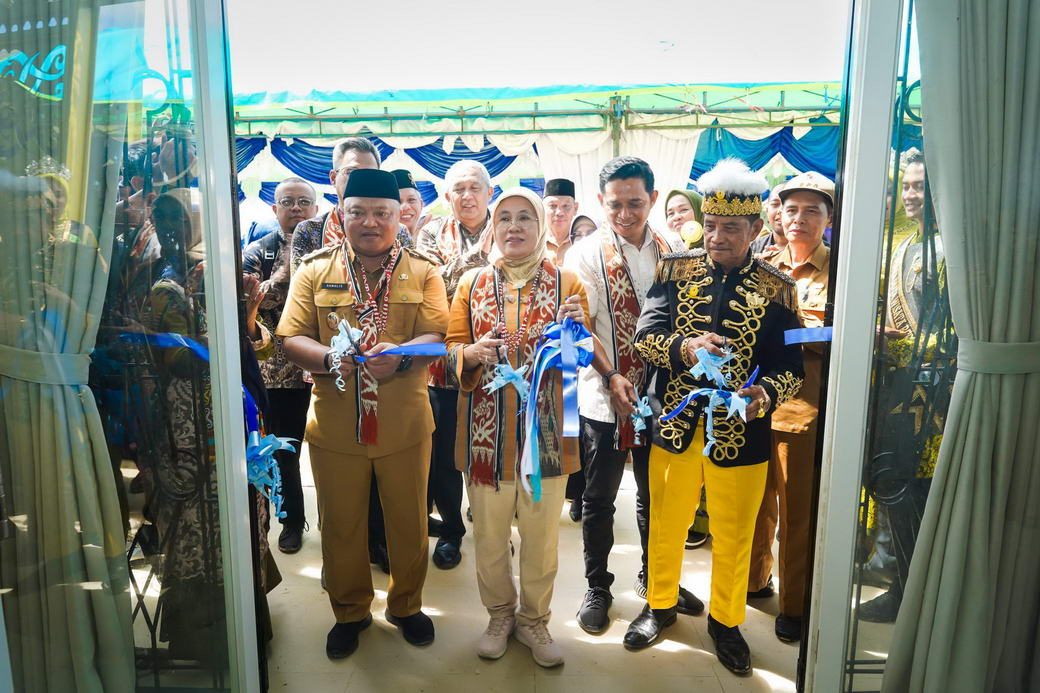
Recently, the Director General of IKMA attended the inauguration of the Sambaliung Tenun Weaving SMI Center in Berau Regency, East Kalimantan Province. According to her, the development of the Sambaliung Tenun SMI Center is a collaboration between Kemenperin and the Berau Regency Government to maximize the potential of the local weaving industry, using the 2022 and 2024 Special Allocation Fund (DAK) for the SMI sector. The center, located in Sukun Tengah, Sambaliung District, Berau Regency, has developed 22 weaving SMIs under the guidance of the Berau Regency Office of Cooperatives, Industry and Trade.
“The center's development aims to support SMI players through various services such as production facilitation with the latest machinery and equipment, product standardization, and promotion and marketing assistance,” Reni explained. Developing the center is also a concrete step by the government to build the Sambaliung Tenun SMI center ecosystem in Berau Regency.
The Director General of IKMA said the center's development is inseparable from the potential of the wastra industry to become one of the industrial sectors that applies environmentally friendly industry principles through the slow fashion
concept in its business processes.
“A sustainable fashion
movement is currently growing amid the strong fast fashion trend. The archipelago's wastra industry is present not only as a cultural product, but also as a solution: its production process, rich in local wisdom, the use of natural materials and the philosophy embedded in it make wastra very much in line with the slow fashion concept,” Reni explained.
Great potential
The Director General of IKMA further stressed making the wastra industry a fashion industry that emphasizes quality, sustainability and fairness for all parties. This is also part of Kemenperin's efforts to promote the weaving industry as part of the national textile industry subsector, which has great potential in Indonesia.
“As an industrial sector pursued by artisans, the weaving industry not only plays a role in maintaining tradition, but also contributes to developing family economies,” Reni added.
The Director General of IKMA also stressed the importance of SMIs' enthusiasm for continued innovation, so that Berau Regency's woven products can compete in local markets and even break into export markets. “We also emphasize to SMIs that they must keep paying attention to product quality, market diversification and sustained promotion,” she explained.
In addition, IKMA players need to take advantage of digital opportunities and literacy, and build partnerships with various parties that have potential for developing woven products in market expansion, such as designers, academics and other related economic sectors.
The Secretary of the Directorate General of Small, Medium and Miscellaneous Industries, Yedi Sabaryadi, said monitoring and evaluation of the Sambaliung Tenun SMI Center's operations will be carried out against the studies and activities already implemented by the Berau Regency Government. “Especially the institutional aspect of the center in the form of a UPTD, which is expected to be established this year,” he said.
Yedi added that with the UPTD in place, his side hopes the SMI center can become an effective platform for developing SMIs, increasing product competitiveness and driving local economic growth.
“We will oversee the development of the Sambaliung Tenun SMI Center through an evaluation in the third quarter of 2025, and we hope the center can operate routinely, optimally and sustainably, with operating standards based on the study carried out in the 2024 fiscal year,” he explained.
Yedi hopes that in 2025 the center's institution, in the form of a UPTD, can also begin applying a self-financing scheme, funded either from the regional budget (APBD) or from levies based on laws and regulations. “We call on weaving SMI players: let us make optimal use of this facility and make this place a space for collaboration, learning, innovation and increasing competitiveness,” he concluded.
Source: Press Release of the Ministry of Industry of the Republic of Indonesia