
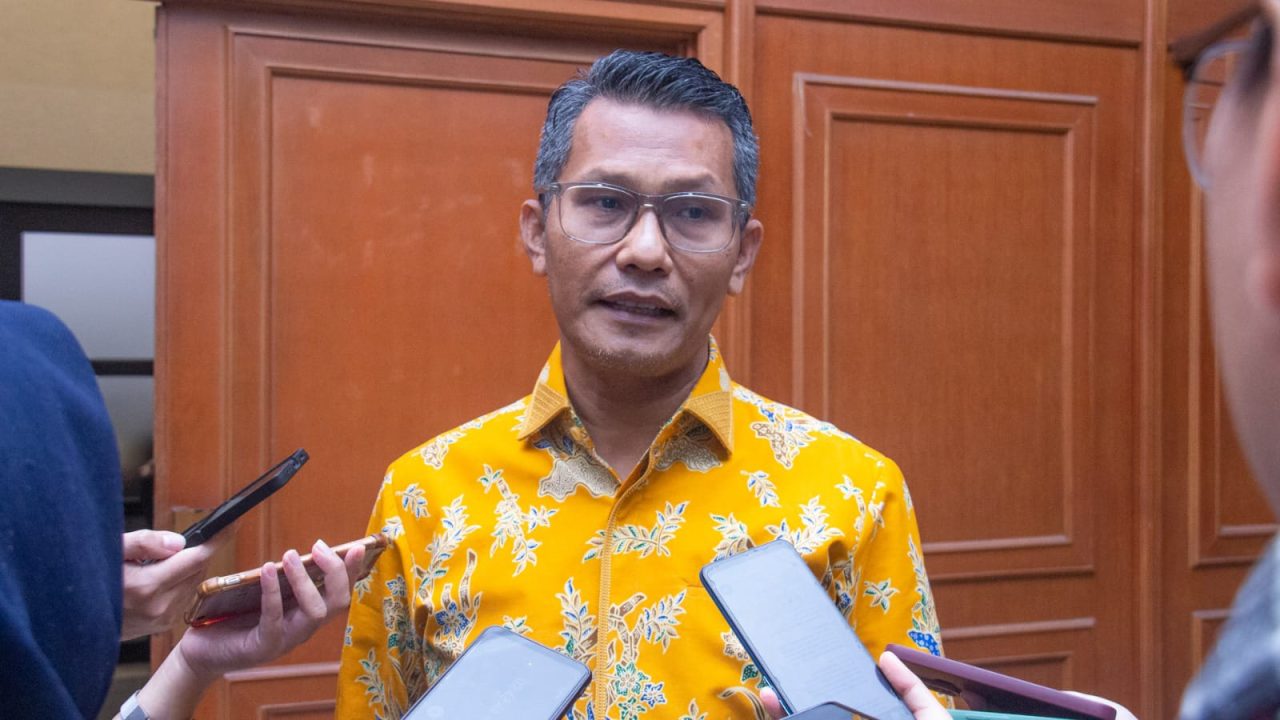
Jakarta – In 2025, new hope for national textile industry development has begun to emerge as the sector expands. GDP indicators in Q1 and Q2 grew by more than 4 percent. According to the Ministry of Industry (Kemenperin) spokesperson Febri Hendri Antoni Arief, this improvement is the result of gradual policy evaluation after the industry had previously been under heavy pressure from macroeconomic factors and a flood of imports, especially apparel, due to limited import restriction instruments.
Febri also corrected opinions recently expressed by several parties, including the Textile Alumni Association and KAHMI Rayon, which accused Kemenperin of causing mass layoffs in the Textile and Textile Products (TPT) sector due to weak import trade governance. “The question is, what data are they using? The instruments Kemenperin has are only part of the textile import ecosystem chain. In fact, the largest imports are not from technical consideration (Pertek) import allocations issued by Kemenperin,” Febri stressed.
He explained that the gap between BPS data and Pertek cannot simply be attributed to Kemenperin's policy, because imported goods can enter the domestic market through Bonded Zones, bulk imports or illegal goods — all without Pertek restrictions (lartas) from Kemenperin. “This needs to be understood first before giving an opinion so that there is no flawed reasoning. In a democracy people may express their opinions, but they must be accompanied by understanding and objective data,” he said.
Febri further revealed that the total number of HS codes for the TPT industry from upstream to downstream is 1,332 tariff lines. Of these, those in the Lartas category with PI and Pertek requirements under Minister of Trade Regulation Number 17 of 2025 reach 941 HS or 70.65%, while those requiring LS number 980 HS or 73.57%. Previously, under Minister of Trade Regulation Number 8 of 2024, the number of HS codes with Pertek regulated by Kemenperin was only 593 HS, or around 44.51%. This change shows that the flood of imported TPT products occurred when many TPT product HS codes were not subject to lartas, LS or PI.
Febri stressed that from 2017 until now, TPT import regulation has always been based on official rules. “From 16 February 2017 to July 2022, import allocations were made using annual needs data from Kemenperin, based on ministerial-level Limited Coordination Meetings (Rakortas) at the Coordinating Ministry for Economic Affairs,” he explained.
In July 2022, Ministerial Regulation 36/2022 was issued, governing the issuance of TPT PI based on industrial capability verification (VKI). VKI was initially carried out by Kemenperin, then by VKI bodies. In 2023, 493 companies were approved, with a fiber volume of 142,644.85 tons compared with total BPS imports of 148,162.60 tons (96.3%). For yarn, VKI approved 373,416.42 tons, exceeding BPS import data of 236,145.75 tons (158.1%).
Entering 2024, Ministerial Regulation 5/2024 came into force, changing the mechanism for issuing TPT PI to be based on Pertek from Kemenperin, valid per calendar year. “The number of approved companies reached 542. For fiber, Pertek approved 23,851.52 tons, or 19.3% of total BPS imports of 123,693.66 tons. For yarn, Pertek reached 147,259.01 tons, or 43.7% of total BPS imports of 336,642.40 tons. This shows a significant improvement compared with 2023,” Febri explained.
He also noted that only since August 2025 has the Pertek for apparel import regulation been delegated to Kemenperin. “This is very important because it means the entire TPT chain, from upstream to downstream, is now within a clear regulatory corridor in line with the regulatory mechanism,” he stressed.
Meanwhile, Febri also said that if the public has information, data or evidence indicating fraud in the issuance of TPT import Pertek within Kemenperin, it should be submitted to Kemenperin for investigation. If the allegations are proven, they will be used as the basis for cleaning up such fraudulent practices within Kemenperin. Minister of Industry Agus Gumiwang Kartasasmita has repeatedly affirmed his commitment to an “internal clean-up of Kemenperin” from various fraudulent practices. Kemenperin has itself investigated cases of alleged corruption within the ministry and reported them to law enforcement. We have also improved systems and carried out internal clean-ups to prevent such cases from happening again.
Febri concluded by stressing that all TPT import mechanisms still refer to the Minister of Trade Regulation, with Lartas exemptions for Bonded Zones (KB), Bonded Warehouses (GB), Free Trade Zones and Free Ports (KPBPB), Priority Lane Importers, Bonded Logistics Centers (PLB), Special Economic Zones (KEK), Authorized Economic Operators (AEO) and Main Customs Partners (MITA) Producers, and Import Facilities for Export Purposes (KITE). “Kemenperin ensures that TPT import regulation mechanisms are carried out consistently, transparently and accountably. Figures that appear low in Pertek and VKI actually show the government's selectivity in maintaining a balance between industry's needs and the protection of domestic products,” he concluded.
Source: Press Release of the Ministry of Industry of the Republic of Indonesia