
The G20 Summit was held on 15–16 November 2022, marking the end of Indonesia's G20 Presidency in 2022, which was then handed over to India. The summit, attended by leaders of member countries of this multilateral forum, produced the G20 Bali Leaders’ Declaration and concrete deliverables listing cooperation projects of G20 members and invited countries.
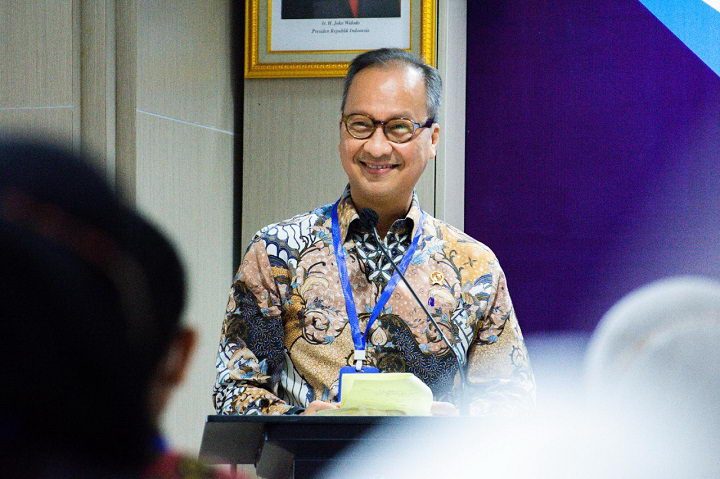
“As President Joko Widodo said, Indonesia ensured that the G20 benefits its members and the world, especially developing countries, in line with the theme recover together, recover stronger,” Minister of Industry Agus Gumiwang Kartasasmita said in Jakarta on Saturday (19/11).
Paragraph 37 of the G20 Bali Leaders’ Declaration sets out commitments on trade, investment and industry, namely to strengthen international trade and investment cooperation to resolve supply chain issues and prevent trade barriers. The G20 believes trade and climate/environmental policies should be mutually supportive, and that the WTO can be consistent with and contribute to the objectives of sustainable development.
The G20 also recognizes the importance of inclusive international cooperation in digital trade, and the need to support value addition through inclusive and sustainable investment in productive sectors such as downstream manufacturing, digital trade and services, as well as bridging foreign investors and local companies, especially small and medium-sized ones.
The G20 noted the addition of industry issues to the TIIWG as an initiative of Indonesia's Presidency to discuss policy coherence between trade, investment and industry, and to keep addressing industry-related issues in the broader G20 process. “Policy coherence between trade, investment and industry is important to face current and future economic challenges,” the Minister explained.
Earlier, ahead of the 2022 G20 Summit, the TIIWG series included the Trade, Investment and Industry Ministerial Meeting (TIIMM). The G20 TIIMM outcome document was one element in drafting the G20 Bali Leaders’ Declaration. On the sidelines of the ministerial meeting, Indonesian businesses also signed trade contracts with partners in several countries, totaling 23 contracts worth USD 1 billion.
The G20 also stressed the importance of digitalization, key to recovery and strengthening across sectors, including supporting inclusive trade, industrialization and investment. It also increases productivity and unlocks future economic potential, especially for MSMEs, SMIs and start-ups. This is important to ensure no one is left behind in digitally transforming society.
“As the President said, the digital economy is key to the future of the world economy and now accounts for around 15.5% of global GDP. Digital transformation also opens opportunities for small communities to become part of global supply chains. This is in line with efforts by Kemenperin and stakeholders such as the Indonesian Chamber of Commerce and Industry (KADIN) to facilitate link and match between large industries and SMIs,” the Minister said.
The G20 Forum also seeks to strengthen international cooperation to secure energy affordability and accessibility by limiting energy price increases and advancing clean, safe, inclusive and sustainable technologies. The forum declared its commitment to support investment in sustainable infrastructure and industry.
G20 cooperation also opens opportunities to strengthen capacity and cooperation in medical device manufacturing at local and regional levels, supporting dialogue and collaboration to build a trusted global digital health network as part of efforts to strengthen future pandemic prevention.
On the sidelines of the G20 Summit, the Ministry of Industry cooperated with innovator Sehat Sutardja of Zerro Power Systems. The cooperation is expected to drive the development and capacity of the semiconductor industry in Indonesia. Through it, Kemenperin seeks to reduce dependence on semiconductors, whose supply chains are increasingly difficult and whose demand keeps growing.
The G20 also sees that global economic challenges through next year will not be easy. Threats such as inflation and food and energy crises are driving a global slowdown. The Government of Indonesia therefore invited G20 leaders to create conducive conditions for the world's future and end tensions.
Opportunities for Green Industry Development
On the climate and energy crisis, the G20 sees the importance of rapid transformation and diversification of energy systems, and improving energy security and market resilience and stability, by accelerating and ensuring a clean, sustainable, just, affordable and inclusive energy transition, as well as sustainable investment flows.
The G20 stressed its commitment to achieving global net zero greenhouse gas emissions by or around mid-century, taking into account the latest scientific developments and differing national circumstances.
Kemenperin continues to work to transform national industry toward green industry through two strategies: greening existing industries (greening the brown industry) and creating new industries in line with green industry principles (developing the new green industry). To accelerate competitive green industry, Kemenperin runs priority programs including improving production and resource efficiency, developing environmentally friendly raw materials (green materials), and green products.
Acceleration is also supported through energy efficiency and use of clean energy and new and renewable energy (EBT), reducing greenhouse gas emissions, pollution and waste, water efficiency and resilience in industry, applying the circular economy and 4R (reduce, reuse, recycle and recovery), and increasing and expanding green jobs. Through these programs, industrial competitiveness is expected to keep rising without sacrificing environmental functions and while safeguarding public health.
“Countries will jointly support achieving the global net zero commitment. This gives Indonesia's manufacturing sector the opportunity to develop sustainable green industry, not only through the automotive industry by producing battery-based electric motor vehicles (KBLBB), but also other industries carrying out environmentally friendly activities,” the Minister said.
Source: Press Release of the Ministry of Industry of the Republic of Indonesia