

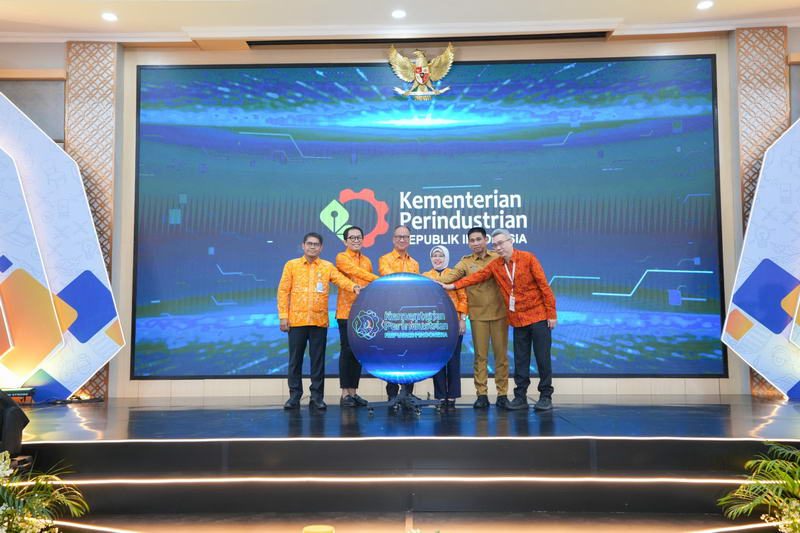
The Ministry of Industry (Kemenperin) continues to strengthen the implementation of the Domestic Component Level (TKDN) policy as a strategic instrument for encouraging the use of national industrial products and services. This commitment was realized through outreach on the Regulation of the Secretary General of Kemenperin on Technical Guidelines for Calculating the TKDN Value of Goods and the TKDN Value of Industrial Services, held as part of the Domestic Product Business Matching 2025 series of events.
Minister of Industry Agus Gumiwang Kartasasmita stressed that the Increased Use of Domestic Products (P3DN) policy plays a strategic role in maintaining and strengthening the added value of the national manufacturing industry. In his view, using domestic products is not just a matter of shopping preference, but an important instrument for deepening the industrial structure, strengthening upstream–downstream linkages and ensuring that economic added value continues to be created at home.
“Studies show that every IDR 1 spent on domestic products generates an economic impact of up to IDR 2.2. This finding confirms that using domestic products has a large and sustainable multiplier effect on national economic growth,” Minister of Industry Agus Gumiwang Kartasasmita said in his remarks at the opening of the Domestic Product Business Matching 2025 in Jakarta on Monday (15/12).
In line with this, the Head of the Center for Increased Use of Domestic Products (P3DN), Heru Kustanto, explained that the technical guidelines for calculating TKDN are mandated by Regulation of the Minister of Industry Number 35 of 2025, specifically Articles 13 and 17, which authorize the Secretary General of Kemenperin to set the procedures for calculating the TKDN value of industrial goods and services.
“These technical guidelines were prepared to provide certainty, uniformity and transparency in the TKDN calculation process, so that they can be a clear guide for businesses, independent verification bodies and all stakeholders,” Heru said.
In the outreach session, Heru explained that the TKDN value of goods is calculated based on three main components: direct materials weighted at 75 percent, direct labor at 10 percent and factory overhead at 15 percent.
“The components calculated include direct materials, direct labor and factory overhead, reflecting investment and production activities at home, whether in one's own facilities or through cooperation with other industrial companies, and all must be supported by supporting documents,” he explained.
He added that Kemenperin also grants an additional TKDN value for goods of up to 20 percent based on a company's intellectual capability or brainware, including investment in research and development, the existence of R&D divisions and programs, and the application of R&D results in production. Besides TKDN for goods, Kemenperin also socialized the calculation of TKDN for Industrial Services, which is based on the ratio of domestic industrial service costs to total industrial service costs, covering labor costs, work tools or facilities, and general services. The calculation results in an Industrial Services TKDN Certificate as official recognition of the domestic content level of industrial services.
There are currently 71 Indonesian Standard Industrial Classification (KBLI) codes for industrial services, grouped into 12 categories, ranging from industrial engineering and construction services, research and design services and maintenance and repair services to Industry 4.0 support services and creative content. The results of the calculation are set out in an Industrial Services TKDN Certificate issued by the Ministry of Industry as official recognition of the domestic content level of industrial services.
Through outreach on these technical guidelines, Kemenperin hopes businesses will better understand the TKDN calculation mechanism in a comprehensive and accountable way, increasing their participation in the P3DN program. These efforts are expected to strengthen the national industrial structure, increase domestic added value and have a real impact on national economic growth and employment.
Source: Press Release of the Ministry of Industry of the Republic of Indonesia