
Kemenperin stressed that, institutionally, it does not tolerate illegal imports, manipulation of export facilities or abuse of authority that could harm national industry and the state economy. If there is any information, data or evidence indicating irregularities, the involvement of rogue individuals or practices outside the rules in the process of issuing Technical Considerations (Pertek), please submit it to the Kemenperin complaint center at the Public Service Unit (UPP) or the Inspectorate General (Itjen) of Kemenperin. Kemenperin will investigate thoroughly if there is strong data and evidence of such fraudulent practices. Kemenperin also fully supports law enforcement efforts against all types of illegal import practices.
Minister of Industry Agus Gumiwang Kartasasmita has consistently emphasized the importance of strengthening internal integrity, cleaning up systems and improving governance to prevent repeated fraudulent practices in the industrial sector.
In addition, Kemenperin routinely and continuously communicates with businesses and TPT industry associations, through official forums, policy dialogues and technical discussions on strengthening import governance, supervision and domestic industrial development.
On these occasions, Kemenperin has consistently encouraged transparency, regulatory compliance and system improvements, so that the policies applied truly support a TPT industry that is healthy, competitive and oriented toward real production and exports.
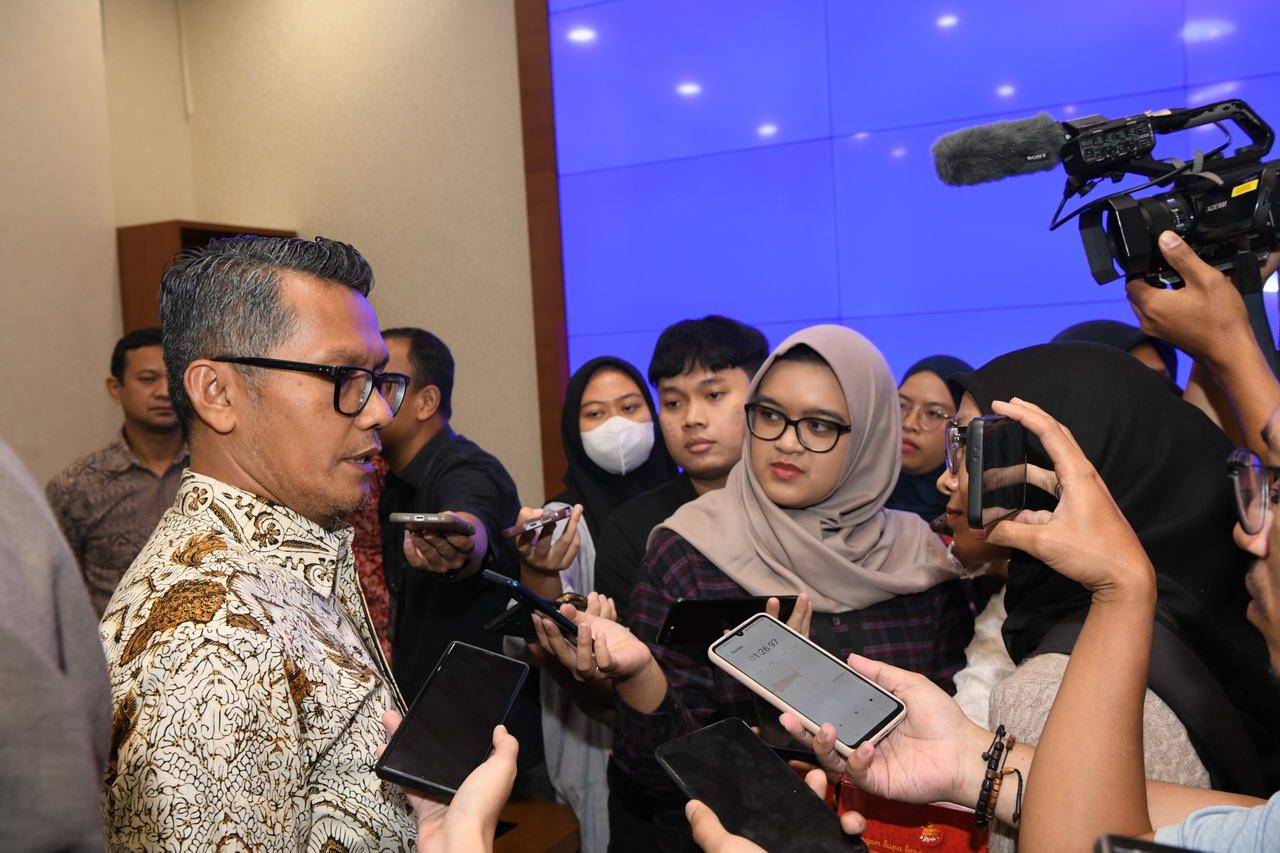
“Input and criticism from associations and stakeholders will continue to be material for our evaluation in refining policy, while strengthening synergy across ministries and agencies to close loopholes that could be abused,” explained the Ministry of Industry spokesperson, Febri Hendri Antoni Arief.
Kemenperin invites all parties to view this issue as a whole, proportionally and based on data, and to support comprehensive cross-authority handling of alleged import mafia practices, so that the problem is not oversimplified, leading to wrong conclusions.
Responding to news reports on findings by the Financial Transaction Reports and Analysis Center (PPATK) regarding indications of suspicious fund flows worth IDR 12.49 trillion in the textile trade sector, the Ministry of Industry (Kemenperin) stressed that this is not related at all to the issuance of Technical Considerations (Pertek) for TPT imports. TPT import Pertek have been carried out in accordance with laws and regulations and the principles of good governance.
Kemenperin fully respects and supports PPATK's authority and analytical findings on suspicious transactions in the accounts of the textile trading companies. Kemenperin supports follow-up on PPATK's findings on suspicious transactions and the legal process.
Febri said that Kemenperin has not seen, and there is no evidence, linking the suspicious transactions to the process of issuing TPT import Pertek at Kemenperin. Certain parties outside PPATK and law enforcement have tried to link the two matters even though they are unrelated.
“We should wait for the legal process regarding the suspicious transactions of IDR 12.49 trillion in textile trade sector accounts. Kemenperin supports PPATK's findings and the legal process. We are confident that the suspicious transactions are not related at all to the process of issuing TPT import Pertek at Kemenperin, because the process of issuing these import recommendations has met the principles of good governance, namely transparency and accountability under the existing rules,” Febri said.
Febri further said that, in principle, the entire Pertek issuance process is carried out based on applicable regulations, through a documented, traceable system equipped with internal oversight mechanisms.
Febri stressed that not all TPT import flows go through Kemenperin's Pertek. The Pertek instrument covers only part of the national textile import ecosystem. There are still various other customs schemes outside Kemenperin's authority that do not require a Pertek, including Bonded Zones, Bonded Warehouses, Bonded Logistics Centers, Special Economic Zones, Import Facilities for Export Purposes (KITE) and certain other import channels.
As stated in Kemenperin's previous press release, the gap between national import data and Pertek volumes cannot automatically be concluded to reflect weak governance at Kemenperin. Imported goods can enter through various mechanisms, including bulk imports and illegal practices, which are outside Kemenperin's authority and do not require a Pertek.
Febri also stressed that from 2017 until now, TPT import regulation has always been carried out through official mechanisms across ministries and agencies. The process includes determining import needs through Limited Coordination Meetings (Rakortas) of the Coordinating Ministry for Economic Affairs, applying Industrial Capability Verification (VKI), and the annual Pertek issuance mechanism regulated by Regulation of the Minister of Industry. All these stages are carried out in a transparent, measured and documented manner.
“Data show that Pertek volumes have in fact become more selective and proportional compared with total national imports. This reflects the government's caution in maintaining a balance between meeting industry's raw material needs and protecting domestic industry,” he stressed.
The Kemenperin spokesperson added that expanding the scope of HS codes subject to prohibition and restriction (Lartas) policies and Pertek in the latest regulations is a corrective step by the government to strengthen the national TPT import trade system and close loopholes for abuse.
Source: Press Release of the Ministry of Industry of the Republic of Indonesia